Dubai Courts: From the Memory of Place to the Justice of the Future
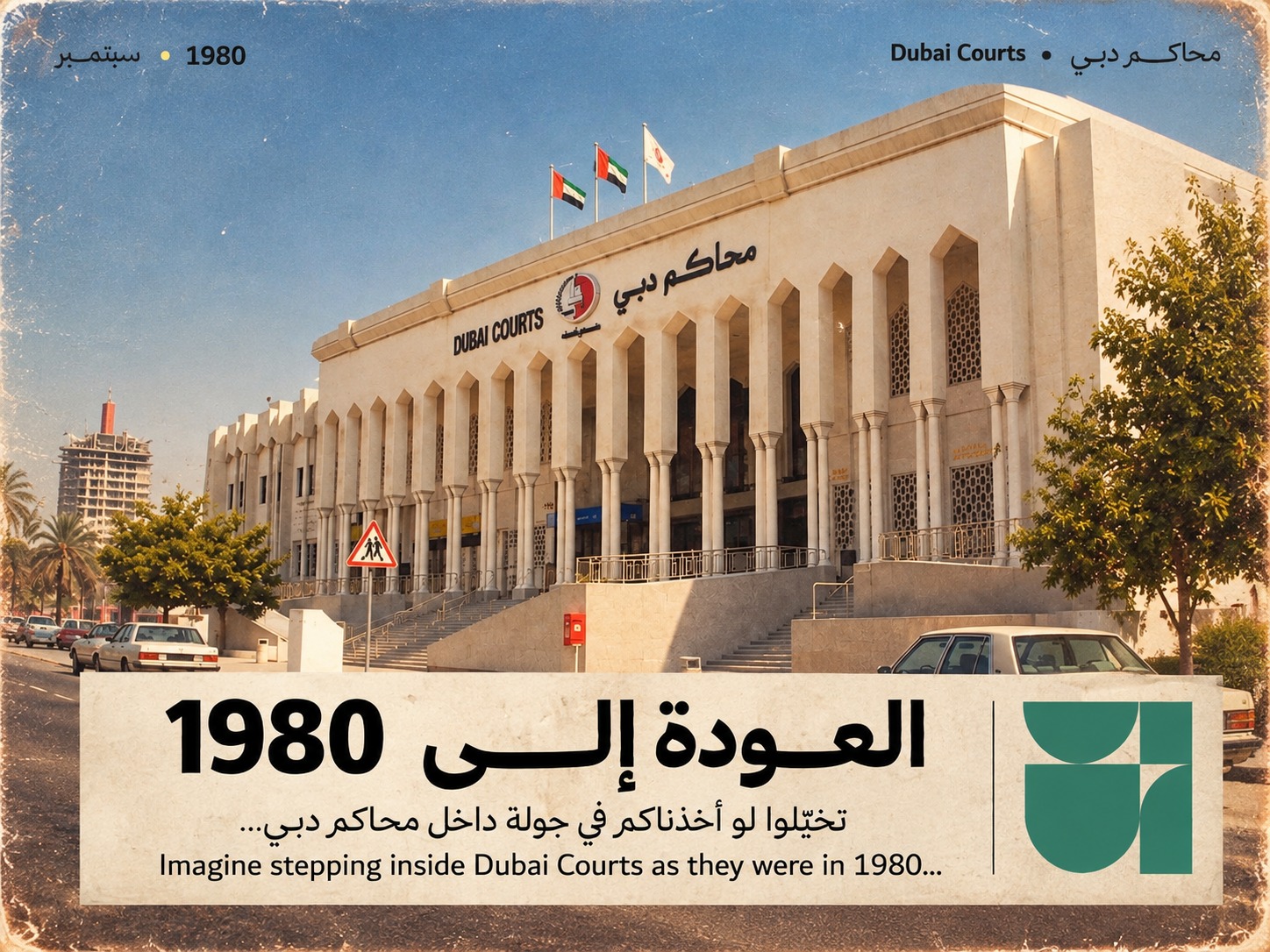
When we look at a photograph of the Dubai Courts dating back to 1980, we are not merely looking at an old meeting room or furniture that has changed over time. Rather, we are looking at a stage in the development of a justice system within an emirate that recognized early on that genuine development cannot be complete without a strong judiciary and institutions capable of keeping pace with the evolution of society.
Dubai Courts recently shared, through its official Instagram account, a collection of photographs recalling the appearance of the courts in 1980. This beautifully documented journey takes us back to the beginnings and opens the door for comparison between the way judicial work was conducted at that time and the advanced system we see today.
What is particularly striking about this journey is that the development was not limited to buildings, furniture, or technology. It also extended to the very concept of access to justice.

What once required personal attendance, paper files, and multiple visits can now, in many cases, be accomplished through digital services and electronic systems that have significantly reduced the time required and made it easier to follow up on cases and submit applications and documents.
However, the value of judicial development cannot be measured solely by the number of electronic services available.
True development becomes evident when procedures become clearer and faster without compromising due process and the rights of defense, and when technology serves as a tool that supports judges, litigants, and lawyers rather than becoming a new barrier to justice.

For this reason, revisiting photographs from 1980 carries a meaning that goes beyond simply recalling memories.
It reminds us that great institutions do not reach their standing overnight. They are built step by step, with each generation adding what its time requires.
Today, judicial systems are entering a new phase—perhaps an even more sensitive one—with artificial intelligence, data analytics, and automation becoming increasingly integrated into the legal and judicial fields.
Here, the challenge will be different.
The issue will not simply be our ability to introduce technology into the justice system, but our ability to determine the boundaries at which technology must stop, leaving responsibility to human judgment, the law, and judicial conscience.

From a courtroom that dates back more than four decades to an advanced digital judicial system.
The place has changed.
The tools have changed.
The procedures have evolved.
But the purpose remains the same:
To ensure that justice reaches those entitled to it, and that the justice system remains capable of keeping pace with its time without losing its essence.
Photo Source: Dubai Courts





Leave a comment